Technology
/
Book Review
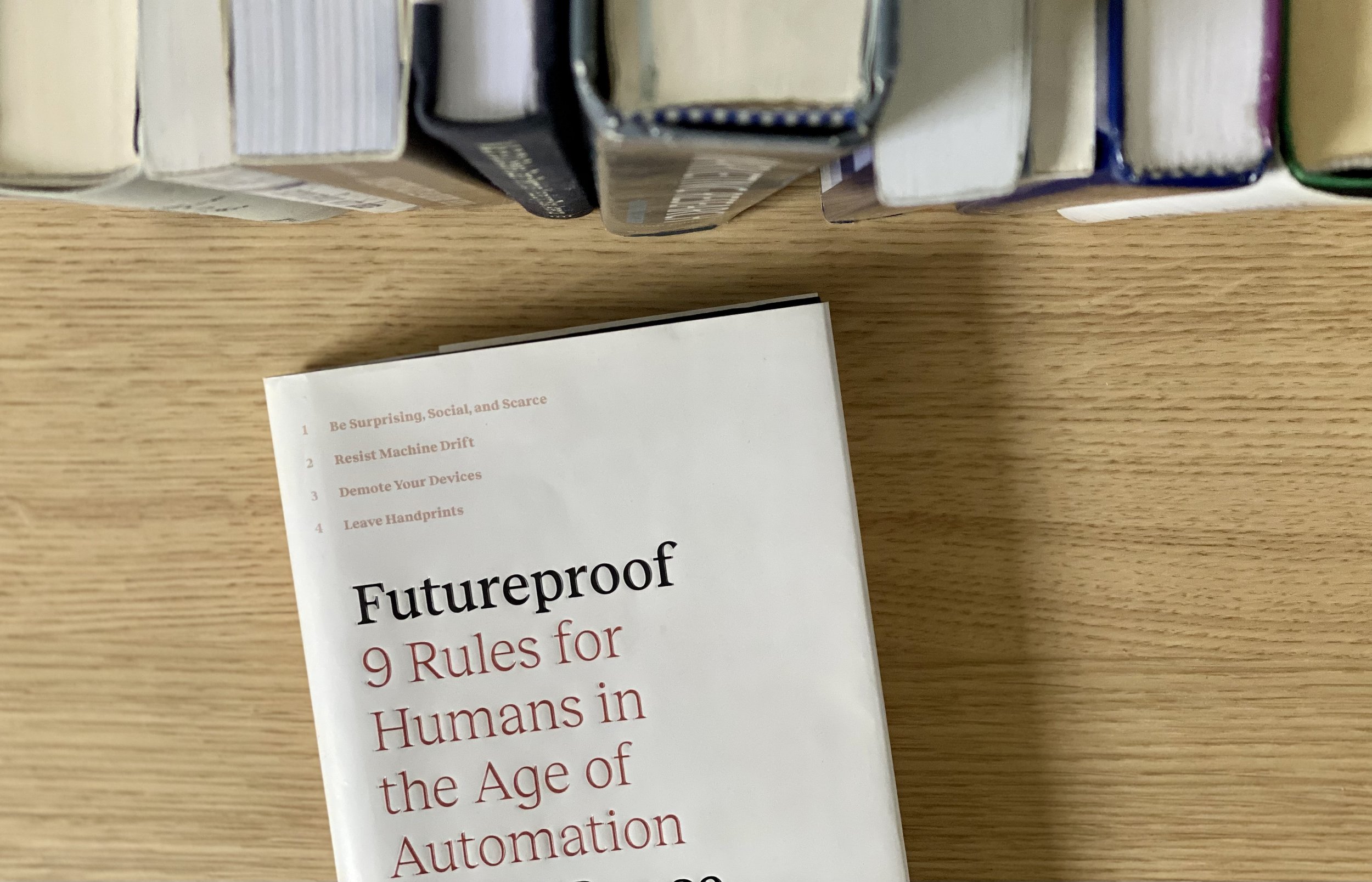
Futureproof
In his latest book, Kevin Roose continues an exploration of technology’s pitfalls with how AI and automation threaten our jobs and sense of humanity but offers a list of rules to survive.
Kevin Roose has spent much of his career writing about technology, including exploring the darker side of its impact on our lives in ways that temper the dazzling keynote speeches and big promises of Silicon Valley. In Futureproof, he continues that exploration by evaluating how AI and automation threaten our jobs and sense of humanity but then offers a list of rules to evade the threat.
The book’s premise is certainly appealing in a time when a global pandemic pushed many more aspects of our lives into the digital realm and generative AI seems poised to go mainstream with several notable and public-facing products. I’m skeptical of authors who claim to have the answer to our problems summed up in a tidy checklist, especially with a problem so existential and quickly evolving. I was prepared for the potential of another professional self-help book built on strawman takedowns and cherry-picked anecdotes. Yet, I finished Futureproof with an appreciation for the knowledge Roose gathered and shared from his journalistic work, the time he invested to gain that expertise, and the approach he took to explain and support his list of rules.
Throughout, Roose draws on examples ranging from recent history to the industrial revolution to demonstrate how technology can take over tasks (including tasks we’re now paid to do) as well as ways we have adapted before and may do so again. These examples feel personal and memorable, from a human receptionist booking salon appointments to the collective experience of a town in the aftermath of a major employer’s layoffs. While they’re specific enough to be effective, however, Roose is successful in extrapolating a lesson from a particular in a way that I could easily imagine how it would apply to my own job and life.
By the way, these rules—not much of a spoiler since they’re listed on the dust jacket—are:
Be surprising, social and scarce
Resist machine drift
Demote your devices
Leave handprints
Don’t be an endpoint
Treat AI like a chimp army
Build big nets and small webs
Learn machine-age humanities
Arm the rebels
To be clear, these don’t form a handy mental checklist you’re going to tick through daily. They’re not even all things you can do yourself. While some can be taken up as personal objectives, others will require entire industries, communities, or the whole of our society to work together to follow. Even so, I believe the book contains prudent advice to better prepare all of us for changes that will continue to rapidly arrive and are unlikely to stop. Even the items we can’t act on alone are topics we should be engaging business leaders, policymakers, and regulators about today.
Since finishing Futureproof, I’ve reflected on what implementing these rules myself looks like (the appendix includes Roose’s own personal plan as an example) and I’ve thought about how that implementation interacts with my existing principles and “rules.” The notion I kept coming back to was to focus on your intended impact as a guide rather than how you intend on making that impact. The landscape will change and you’ll inevitably need to reroute and use different methods to accomplish your goals. With a focus on your intended impact, your mission, you can take changes in stride. I think Roose’s rules are a nice complement to this idea and help to both promote that focus and make rerouting a less perilous endeavor.